Floating Village Siem Reap Boat Tours Transparency and Best Ethics Guide

Floating village Siem Reap boat tours transparency with community benefit and best fit for travelers gives you a faster way to spend your money where it does more good!

Floating village Siem Reap boat tours transparency with community benefit and best fit for travelers with village by village money flow tables, ethics ratings, and booking tips.

Floating Village Siem Reap Boat Tours Transparency and Best Ethics Guide

Floating village Siem Reap boat tours transparency with community benefit and best fit for travelers

f you care about where your money goes on Tonle Sap, the short answer is simple. Floating village Siem Reap boat tours transparency with community benefit and best fit for travelers is strongest in Kampong Khleang and Prek Toal, mixed in Kampong Phluk, thin but promising in Mechrey, and weakest in Chong Kneas.

The best-documented local retention comes from village-run boats, school-linked tours, ranger fees, and small services with clear splits.

The weakest ethical picture shows up when fees are high, the operator is hard to identify, and nobody can tell you what share stays with local families.

If you want the least guesswork, book the villages where local boat crews, local guides, school funds, or sanctuary fees are named up front.

Key takeaway: similar ticket prices do not mean similar local impact. The village model matters more than the headline price.

Floating village Siem Reap boat tours transparency with community benefit and best fit for travelers starts with one plain rule: ask who gets paid first, who gets paid last, and who never gets paid at all.

If you want a ready-made option on the My Siem Reap Tours site, start with the Afternoon Siem Reap floating village tour to Kampong Phluk, the Kampong Khleang floating village guided tour, the Kampong Phluk morning private guided tour, or the Tonle Sap tour from Siem Reap.

Floating village Siem Reap boat tours transparency with community benefit and best fit for travelers

What does floating village Siem Reap boat tours transparency with community benefit and best fit for travelers really mean?

It means you are not just buying a boat ride. You are choosing a money trail.

When you book a Tonle Sap trip, your payment can split in four very different ways. Part may go to local boat crews, part may go to a village fund, part may go to an outside tour company, and part may go to an official fee or protected-area charge. That split tells you more than the sales page does.

This matters because the same lake can give you two very different outcomes. In one model, a rower, a guide, and a school fund all get paid. In another, most of the money leaves the village fast, while local people get only small wages or roadside sales.

So if you are asking me for the shortest possible answer, here it is. Kampong Khleang and Prek Toal look best for local retention. Kampong Phluk is mixed because one part of the visit has a clear village split and another part has a long record of outside control. Chong Kneas is the one I would treat with the most caution.

Which village keeps more of your money local?

The strongest local retention appears in Kampong Khleang and Prek Toal. The weakest public transparency appears in Chong Kneas.

I would not pretend the numbers are perfect. They are not. The data is still patchy. Still, there is enough on the table to make a smart choice.

Village-by-village money flow snapshot

VillageRevenue flow snapshotMy quick read
Chong KneasHigh ticket intake, low public clarity on local shareEasy to reach, weak ethics picture
Kampong PhlukSplit system, some money stays local, much leaks outGood visit, mixed money trail
Kampong KhleangBoat income and surplus stay close to the villageBest all-round ethics case
MechreyLocal links seem real, published splits are thinQuiet option with open questions
Prek ToalRanger fees, paddlers, guides, and village work all get namedBest for birders and ethics-first trips

Chong Kneas

Chong Kneas is the closest village to Siem Reap, which is exactly why so many people end up there first. It is easy, fast, and heavily sold. That convenience comes with a tradeoff. Public figures show strong gross ticket intake, yet there is no clear public breakdown that tells you what share reaches local families, a school fund, or village services.

That is why I place Chong Kneas at the weak end of transparency. You can still go. You may still enjoy the water views. Still, if your main goal is an ethical tour with a clear local money trail, Chong Kneas does not give you much to hold onto.

If you still want to check the official ticket point or port guidance, the safest starting point is Angkor Enterprise.

Kampong Phluk

Kampong Phluk is not one simple story. That is the point many articles miss.

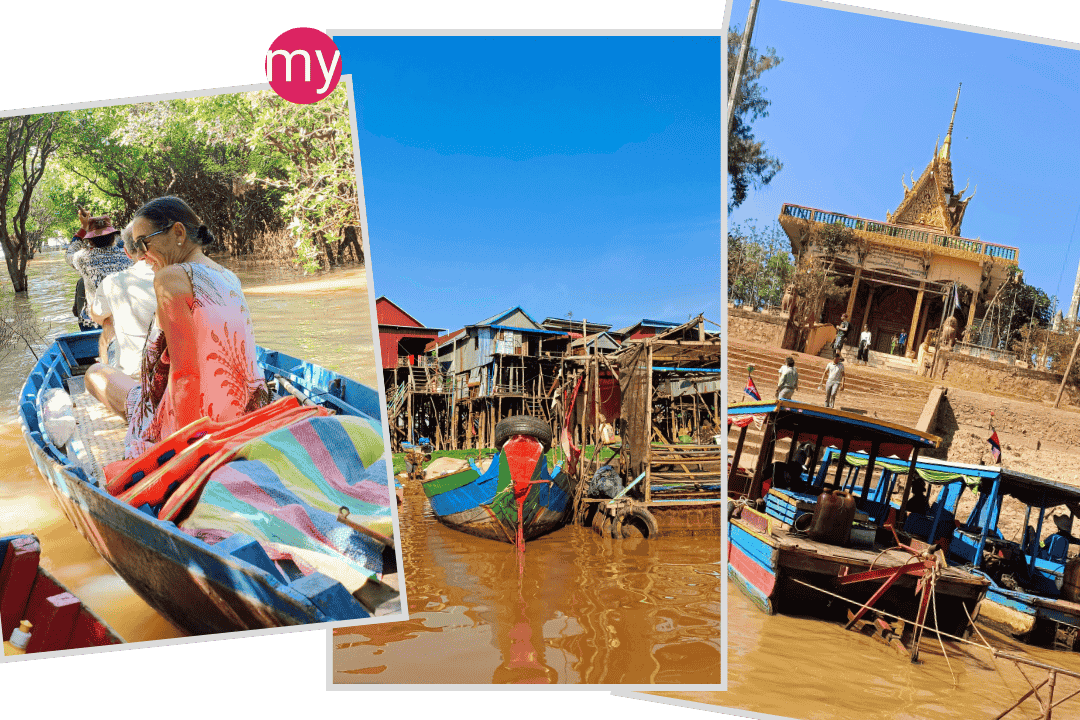
One part of Kampong Phluk has a better local case. The flooded forest paddle boat service has a named split: $5 per small canoe trip, with $2 to the rower$1 to a village fund, and $2 to the operator. I like that because it is specific. You can point to it. You can test it.

Another part of Kampong Phluk has a much weaker picture. Large visitor flows and outside control have long shaped the main motorboat side of the visit. That means a traveler can do a trip to the same village and either feed local wages in a visible way or feed a more top-heavy structure.

So yes, Kampong Phluk can be a good visit. Just do not assume that every Kampong Phluk ticket is equally ethical.

Kampong Khleang

If you ask me which village gives the clearest all-round case for local retention, I keep coming back to Kampong Khleang.

Why? Two reasons. One, local boat rights are tied to villagers rather than one dominant outside gatekeeper. Two, the best-known NGO-linked tour example gives a usable cost picture. In the published sample, a $140 tour for four guests leaves about $63 as surplus for the Bridge of Life School, while the rest goes largely to transport, boat hire, local guiding, food, and local fees.

That is not perfect. Still, it is far better than the usual black box. You can see where the money is going. You can see who is being paid. And you can see a direct village result at the end of the chain.

Mechrey

Mechrey sits in the middle for me.

I do not see the same level of hard breakdowns that I see in Kampong Khleang. At the same time, I also do not see the same scale of commercial pressure that worries me at Chong Kneas. Reports on Mechrey keep pointing to small-scale fishing life, quiet routes, and local boat use. That sounds good. It just is not backed by a clean public split.

So I would call Mechrey a lower-volume, lower-pressure option with a softer but less proven ethical case.

Kampong Khleang and Prek Toal rate best. Chong Kneas rates worst. Kampong Phluk and Mechrey sit in the middle for different reasons.

How do ethical risk, transparency, and traveler fit compare across the main villages?

Kampong Khleang and Prek Toal rate best. Chong Kneas rates worst. Kampong Phluk and Mechrey sit in the middle for different reasons.

Here is the fast comparison I would want in front of me before booking.

Ethics and traveler fit table

VillageEthical risk and transparencyBest fit for travelers
Chong KneasHigh risklow transparencyTravelers who want the nearest stop and accept tradeoffs
Kampong PhlukMedium riskmixed transparencyFirst timers who want classic lake views and mangrove rides
Kampong KhleangLow riskgood transparencyEthics-first travelers, photographers, curious return visitors
MechreyMedium-low risklimited transparencyQuiet-trip seekers who do not need a polished package
Prek ToalLow riskgood transparencyBirders, slow travelers, and people who want stronger local impact

Where does the money most likely go?

VillageLocal wages and village fundOutside margin and official fees
Chong KneasLocal wages exist but are hard to sizeOutside operators appear to take the largest slice
Kampong PhlukGood on the canoe side, mixed on the main motorboat sideMain access has heavier leakage
Kampong KhleangHigh local retention through boats, guides, and school-linked surplusOutside margin looks smaller
MechreySome local retention is likelyPublic detail is thin
Prek ToalGood spread across paddlers, guides, cooks, crafts, and sanctuary workLogistics still cost money, but profit-max style signals are weaker

Why do CBET-style tours look better than private operator models in floating village Siem Reap boat tours transparency with community benefit and best fit for travelers?

Because the best cases name the people, the fees, and the result.

That sounds obvious, but it is the whole game.

A village-first model usually shows at least one of these signs:

  1. named local boat group or queue system
  2. school, ranger post, or village fund named as the end point
  3. public example of how one booking gets split
  4. A local guide or rower whose wage is not hidden
  5. A fee that has a clear reason, like sanctuary entry or patrol work

Private operator models can still pay local people. I am not saying every outside operator is bad. I am saying the ethical score gets weak when the only clear number is the price you pay, not the share villagers keep.

That is why floating village Siem Reap boat tours transparency with community benefit and best fit for travelers is not just a fancy phrase. It is the difference between a trip that leaves a trace you can defend and one that leaves you guessing.

Key benefits of clearer money flow

  • You know who gets paid
  • You can avoid vague donation stops
  • You can pick tours with named local work
  • You can match your budget to your ethics
  • You are less likely to reward the worst habits
The clearest splits come from Kampong Phluk canoe services, Kampong Khleang school-linked tours

What do the best known money splits look like in real terms?

The clearest splits come from Kampong Phluk canoe services, Kampong Khleang school-linked tours.

Here are the numbers I trust most because they are concrete, not just sales copy.

Kampong Phluk small canoe service

$6 flooded-forest paddle trip is the cleanest micro-example on Tonle Sap. $3 goes to the rower$3 goes to a village fund, and $0 goes to the operator. That means 100 percent stays local if you count the rower plus the village fund.

Kampong Khleang school-linked model

A published example for four guests paying for the lake boat means that close to 45 percent goes to a named village-linked school result, while much of the rest still pays local transport and local staff.

What should you book if you want a fair trip and not just the easiest one?

Book by money trail, not only by distance from town.

If you want the shortest ride from Siem Reap, Chong Kneas will keep tempting you. I get it. It is close. Still, close is not the same as fair.

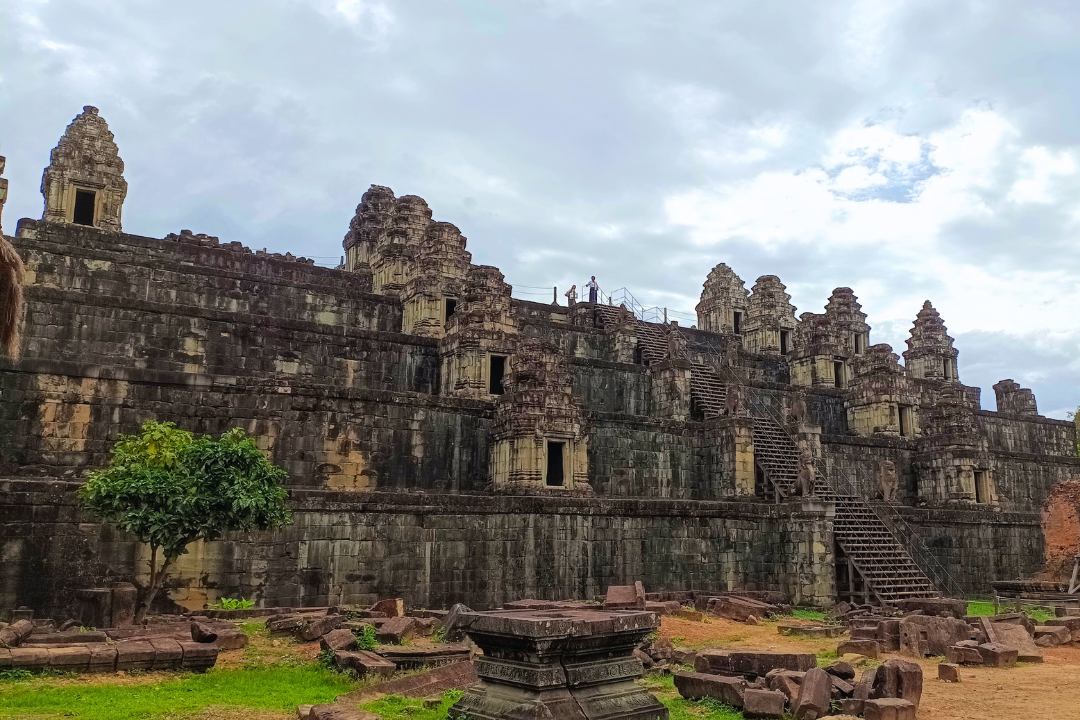
If you want the best blend of ethics, scenery, and a strong local case, I would start with the Kampong Khleang floating village guided tour. It fits travelers who want a more grounded village visit and a clearer local money story.

If you want the classic stilt-house and mangrove feel, the Kampong Phluk morning private guided tour and the Afternoon Siem Reap floating village tour to Kampong Phluk are the easiest site picks. Just ask how the boat piece is arranged and whether the mangrove canoe is village-run.

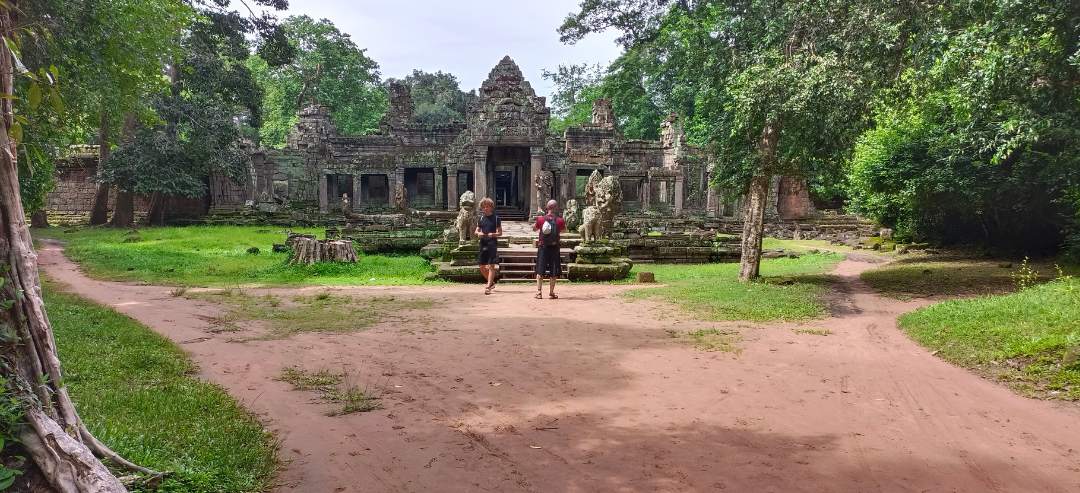
If you want a broad Tonle Sap day with a polished route, look at the Tonle Sap tour from Siem Reap. If you want a temple-and-lake combo, the Angkor Wat to Siem Reap floating village day trip gives you both in one day.

If you want more of the town itself before or after the lake, the Private Siem Reap sightseeing tour is a good add-on.

Floating village Siem Reap boat tour - The best trip is not always the nearest trip. It is the one you can explain to yourself after you get back to town.

What should you ask before you pay?

Five simple questions will save you from most bad surprises.

I use these questions because they cut through vague sales talk fast.

  1. Who owns the boat?
    If the answer is local boat families or a village boat group, that is a better sign.

  2. Is any part of this fee going to a school, patrol team, or village fund?
    Named end points matter.

  3. Are there extra stops for donations, rice, or floating shops?
    If yes, decide now if you want that.

  4. Is the mangrove canoe optional, and who runs it?
    This matters a lot in Kampong Phluk.

  5. Are official fees already included?
    Hidden add-ons are where many bad feelings start.

Quick red flags

Red flagWhat it often meansWhat I would do
No one can explain the fee splitLow transparencyKeep looking
Pressure to buy rice or gifts mid-tourEmotional upsellSay no
“Village help” claims with no named fundWeak proofAsk for details
Big price with no local guide listedThin local wage caseCompare another operator
Very cheap headline, lots of extras laterSales trapGet the total in writing

What is my honest take on floating village Siem Reap boat tours transparency with community benefit and best fit for travelers?

The best trip is not always the nearest trip. It is the one you can explain to yourself after you get back to town.

My short personal view is simple. When I think about floating village Siem Reap boat tours transparency with community benefit and best fit for travelers, I do not look for a perfect village. I look for the least murky money trail. I want to know that a rower got paid, a guide got paid, and some part of my ticket did more than feed a sales chain.

If that sounds like your kind of travel too, start with the villages that show their work. Kampong Khleang is my best all-round pick. Prek Toal is my best ethics-first pick for birders. Kampong Phluk can still be a good choice if you book the right parts of the visit and ask the right questions.

If you want help picking the right Tonle Sap route for your budget, timing, and ethics, contact My Siem Reap Tours here. Tell them what matters most to you: lower ethical riskmore local retentionbirdingquiet villages, or family-friendly pacing. That one message will save you a lot of guessing.

Resources on My Siem Reap Tours

Sources and references

Brought to you by Dan and Mat, Your tour planners.

Leave a Comment

Shopping Cart